|
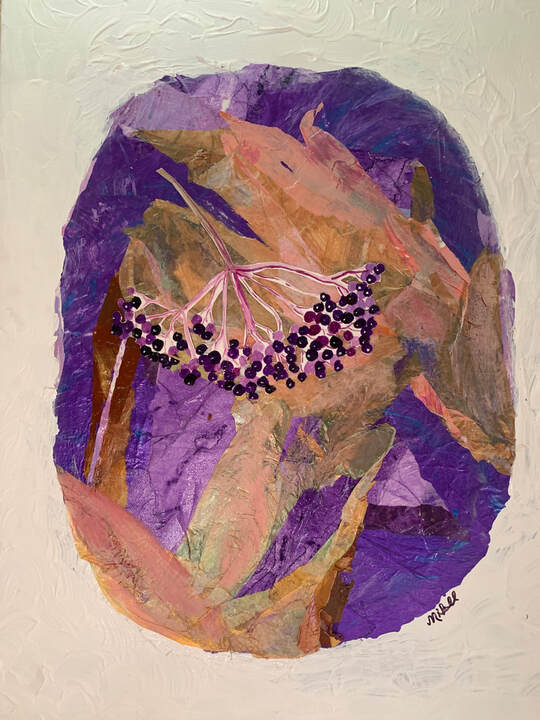
I can’t remember a time in life when protection, hope and peace have been more needed. People are being hurt, families are being ripped apart, long term Minneapolis residents who have contributed so greatly to our city - to our culture, to our economy - are being terrorized and now somebody is dead. " In response to the murder of Renee Nicole Good, 37, by trump’s ICE agents on 1/7/2026. Olea europaeaOlea europaea means European Olive, and is associated with peace. Gender: Masculine Element: Fire Planet: Sun The olive is an evergreen native to the Mediterranean. Olives and olive oil are associated with Mediterranean cuisine. Greeks use the most olive oil per capita followed by Spain, Italy, Tunisia, Portugal, Syria, Joran and Lebanon. I’m fairly confident my annual consumption is equivalent to the Greeks per capita at 24 liters (6.3 U.S. gallons).
In addition to its culinary contributions, the olive has powers to protect, heal, increase fertility, hope and peace. I can’t remember a time when I’ve felt we need protection, hope and peace more. Hanging an olive branch over your doorway will prevent evil spirits from entering and provide protection. Volumes have been written about the health benefits of olive oil. Brides in Greece wore wreaths of olive leaves to ensure fertility and eating the olives was also said to be helpful. Noah released a dove after the flood and it returned to the ark, carrying a freshly plucked olive branch, which symbolized hope, an indication of dry land after a flood. Ancient Greek and Roman civilizations used the olive branch to represent peace following battles. When the losing side admitted defeat, they presented the olive branch to indicate their readiness to surrender. Eirene (Irene), the goddess of peace in Ancient Greece, was fond of the olive.
0 Comments
Box Huckleberry Element: Water Gender: Feminine Planet - Venus Can you name a plant that covers 8 acres of land, is 1300 years old, will protect you and bring you luck as you enter the new year? The box huckleberry is a member of the Ericaceae family, which includes azaleas, rhododendron, trailing arbutus, cranberries and blueberries and more. This particular plant is enormous, but in an understated way. Unlike the giant Sequoias and the Bristlecone pines, known for their size and their age, the box huckleberry is only about a half a foot tall. It covers the forest floor and can easily be overlooked.
My youngest daughter and I have always loved hiking and discovering natural treasures. One of our favorite jaunts is to visit the Hoverter and Sholl Box Huckleberry in Perry County, Pennsylvania. There are two box huckleberry plants in the area. One, at Losh Run, is thought to be over 13,000 years old! Bristlecone pines, at 5,000 years old, were considered to be the oldest living organisms on earth, yet the box elder is significantly older. The age is determined by the rate of growth, approximately 6 inches a year, and was calculated by the size of the plants. Unfortunately, part of the Losh Run Box Huckleberry, which at one time covered an area of about 100 acres, nearly 10 times larger than the Hoveter Sholl, was partially destroyed during the 1970s due to road construction of U.S. 22/322. The remainder is in an area difficult to access. The younger plant is estimated to be 1,200 to 1,300 years old, and fortunately is in a protected area as a National Natural Landmark. The 8 acre colony is situated on a 10 acres area in Tuscarora State Forest with a quarter mile path around the plant. Twenty-seven stations along the loop give information about the the plant. The Hoveter Sholl plant was discovered in 1845 by Spencer Fullerton Baird, professor at Dickinson College in Carlisle. He was a naturalist and became the first curator of the Smithsonian Institution and later the second Secretary of the institution. The box huckleberry was almost forgotten until 1948 when Dr. Fredrick Coville, a graduate of Cornell University working for the Department of Agriculture, determined the extensive growth, covering over 8 acres, was one massive plant! Have you discovered natural wonders worth sharing with others? Have you had any unexpected finds while taking hikes and exploring less traveled paths? Please share them in the comments below! In my previous post, celebrating the Japanese Maple, I referenced “momiji-gari” which means maple viewing or maple hunting, and “kito” - the Japanese name for the maple tree — meaning calm, peaceful, and at rest.
Have you ever wondered why spending time in nature reduces stress? The answer may be found in fractals - the repeating patterns that shape everything from tree branches to riverbanks, from snowflakes to ferns. Mathematician Benoit Mandelbrot (1924–2010) discovered fractal geometry — “the art of roughness” — in the late 1970s. In his bestselling book The Fractal Geometry of Nature (1982), he described how patterns echo throughout the natural world. Building on his work, physicist Richard Taylor of the University of Oregon found that simply gazing at fractal images can reduce stress levels by up to sixty percent! Swedish researcher Caroline Haverhill later used EEG readings to show that viewing fractal patterns increases alpha brain waves, promoting calm and lowering stress hormones like cortisol. In other words — there’s scientific proof that spending time gazing at mountains, trees, and leaves truly improves our health and well-being. Note to artists: Just as fractals in nature calm the mind, creating art inspired by them offers a similar kind of peace. When we paint, collage, or journal about leaves and trees, our hands trace the same repeating rhythms that nature does. The act of noticing and recreating these patterns — the veins in a leaf, the branching of roots, the swirl of a fern — invites stillness. Each brushstroke or paper shape becomes a meditation, echoing the beauty of the natural world and helping the heart find its own quiet pattern of calm. Autumn is a glorious reminder that we are immersed in miracles — and they’re literally falling from the sky! Fan-shaped golden ginkgo leaves, chestnut and chinquapin oaks, rosy-red maples, and orange sumac leaves are just a fractal sampling of nature’s gifts. Zoom in and notice the delicate veins within a single leaf. Zoom out and see the repeating patterns in the branches of a tree. Zoom further still, and you’ll find the same designs echoed in the rolling shapes of the mountains. Give yourself permission to spend time in nature — preferably with loved ones — and let the patterns work their quiet magic. Your body, which is also built upon fractal geometry, will thank you. Eye of newt and toe of frog, Aww, come on now! You didn’t really think witches were scouring the forest to gather the eye of a newt or the toe of a frog, did you? I’ll admit, there was a time when I used to guard my dog in case the witches needed an extra dog tongue. Fortunately, I found out about the secret herbal codes! Folk names were used for herbs long before Shakespeare came along It was a bit like the copyright protections we have today. “Witches” were actually healers who were protecting their recipes and secret ingredients from those who had no understanding of nature, plants, and their magical powers. Secret code names were created to protect the identity of the ingredients, as well as give mystery to the herbal cures. Many plants are still called by their folk names today! Some names can be determined by the part of the plant associated with particular body part: for example, seeds were associated with eyes. If Shakespeare had said mustard seed instead of “eye of newt”, a certain mystery would have been lacking. The toe of a frog was a leaf of cinquefoil, holly leaves were the wool of the bat, and hound's tongue was the tongue of the dog. Thankfully! Even though his descriptions were visually stirring, they were not appreciated by the herbal healers of the time. His using their code names made them furious and they put a curse on not only Shakespeare, but anyone who dared use the word ‘Macbeth’. Uttering the word in a theater is considered bad luck, to this day. Even witches who have dedicated their lives to healing can become enraged and vengeful if their secrets are exposed! Hopefully, I won’t regret writing this article. I think I’ll go gather some agrimony, for protection, just in case! COMMENTS ALICE SCHLOTHAUER ( [email protected] ) For 15 years I lived at the corner of Blymire Hollow Road and Shangrila Road. In that part of York County the story of Mr. Blymire and Mr. Rehmeyer and the Hex Murders in 1928 was told and retold. This time of the year, we would sit on our front porch and watch the hayrides come up Blymire Hollow Road with loads of very frightened people aboard. A book called Hex was written about the incident and you can read all about it on the internet. It is full of hexery and witchcraft. Pretty fascinating! Rosa spp.Rosa is the Latin meaning for “a flower”. Gender: Feminine Element: Water Planet: Venus The rose, cherished internationally, is a native of the United States. The oldest known fossil was found on a slate deposit in Florissant, Colorado, and is estimated to be 35 million years old. In 1987, legislation was passed to make the rose the National Floral Emblem of the United States. It is also the state flower of the District of Columbia, Georgia, Iowa, North Dakota and New York. Throughout history, the rose has been associated with psychic powers, healing and protection. At one time it was used extensively in cooking, and is currently used in teas and desserts. I’m hoping to reintroduce the rose’s culinary versatility with recipes for edible flowers, so watch for rosy recipes coming soon! Most of all, roses are known for their association with love and romance. In addition to being National Rose Month, June is also the month most weddings are scheduled, and roses are often the chosen flower. Roses are also popular for Mother’s Day, Christmas, and birthdays and anniversaries all year long. On Valentine’s Day, approximately 250 million flowers are sold annually in the United States, and one-third of them are roses! “The rose is the emblem of all ages, the interpreter of all our feelings, the rose mingles with our festivities, our joy, our grief. Modesty borrows the delicate blush; it is given as the prize of virtue, the image of youth, innocence, and pleasure. It is consecrated to Venus, the goddess of beauty, and like her, possesses a grace more exquisite than beauty itself.” ~ From the Language of Flowers - 1846, Illustrated by Kate Greenaway Flowers took on a new role in the Victorian era. The Victorians attributed meaning to flowers, creating an elegant and silent language. Roses were a favorite. Over the years, meanings have been expanded and altered. (Yellow roses once symbolized jealousy but the modern interpretation is friendship, for example). For those of you hoping to add more symbolism and meaning to your rose bouquets, my Ode to the Rose, Legends, Lore and Language, from the archives, will help you choose the color and numbers to customize your message. You’ll also find some fun facts, and fantasies, about the rose. Enjoy!
Narcissus spp (poison) Gender: Feminine Element: Water Planet: Venus This week we are featuring the glorious, golden daffodil! There are currently over 13,000 different types, but at one time this beloved spring flower was in danger of being extinct. Daffodils were cherished for over 2,000 years, inspiring poetry first by Virgil, a Roman poet (70 - 19 BC), in his Empurpled Narcissus. In 1807, William Wordsworth wrote I Wandered Lonely as a Cloud, a heartfelt tribute to a “long belt” of daffodils. In 1962, Bullwinkle J. Moose, from The Adventures of Rocky and Bullwinkle and Friends, endured jail time and a fine of one dollar per daffodil to gather a bouquet. But the daffodil's popularity had a period of decline. The golden trumpets were popular through the early 1600s. The botanist John Parkinson (1567-1650), loved the flowers and was the first in England to grow the double yellow Spanish daffodil. He identified 94 varieties. But sadly, the plants fell out of favor. They were later perceived as inferior to tulips, lilies and hellebores, and were no longer valued. For two and a half centuries, daffodils were all but ignored until the Daffodil King came to the rescue! I’m familiar with Johny Appleseed, but had no idea a Daffodil King existed! Peter Barr, the Daffodil King Peter Barr, a Victorian era nurseryman, read Parkinson’s Paradisus in Sole, describing the varieties of daffodils and narcissus that grew in the British Isles in the 1600s. He was frustrated that they no longer existed locally and became obsessed with finding them and giving them a renaissance. Barr, a Scotsman, traveled through Europe in the mid 1800s, often on horseback, in search of these wildflowers.. At age seventy-two, Barr expanded his search worldwide, planning a five year trip which actually lasted for seven. He traveled to Australia, China, Japan, New Zealand, South Africa, islands in the Pacific and the United States to locate and collect the daffodil bulbs. He only spoke Scottish English, so he used pictures to show the locals what he was hoping to find. He told of finding six thousand to seven thousand bulbs in certain areas, and one particularly successful quest resulted in nearly twelve thousand bulbs. All were collected, bagged and returned to England. In 1890, he demonstrated the success of his travels with a four day daffodil festival, and in the years that followed, he put on annual displays of up to two million plants at his nurseries. As a result, the Gardener’s Chronicle, a British Horticulture periodical, gave him the distinguished and well deserved title of the Daffodil King! Barr, a modest man, credited Oscar Wilde’s love of yellow. Barr stated, “Wilde used to lecture on aesthetic colors, and to him we owe more than to anyone else the taste for yellow, to my mind the most beautiful color in nature. He took the sunflower, but that is too ‘lumpy,’ and the people soon got tired of sunflowers. Then my daffodils came, and they came to stay.” [Bendico Advertiser 1900] I found this particularly amusing since Oscar Wilde was once arrested, and charged with gross indecency, for carrying a Yellow Book! At the time, there were books with yellow covers that were considered scandalous and no decent person would openly carry a Yellow Book in public. But that’s a story for another time! It’s impossible to know if daffodils would have been completely obliterated if not for The Daffodil King’s efforts, but it is likely they would not be as well known, revered and cherished as they are today. There is a wealth of information on Peter Barr, and if you are at all intrigued, I highly recommend you check out the links below. . His travel journals were my favorite, describing harrowing, and at times hilarious, adventures! His writing style is delightful! Here’s an example! [20 April 1892] Went on horseback to Jubea [Trubia?]. The horse had four legs, but three of them were lame that is the two front legs had knee caps, and the left hind leg seemed to have lumbago, so that the action was somewhat peculiar – a motion forward, backward and sideways all at one time so that I never knew whether I should fall off or go over the horse’s head or tail. Fortunately I managed to stick on and so escaped biting the dust. After great exertions we covered four miles in three hours. I noticed that I was an object of interest to all on the road but do not know why. [p. 39] Peter Barr, ‘Travel notes’, a transcript on the American Daffodil Society website As you celebrate spring’s return, may you fondly remember Peter Barr, the Daffodil King!
https://thegardenstrust.blog/2020/03/14/the-daffodil-king-of-tooting/ https://studiedmonuments.wordpress.com/2015/03/11/peter-barr-the-daffodil-king/ " If you need help releasing sadness from the past to enable you to find future happiness, the snowdrop will be useful." Galanthus nivalis |
Welcome to my Blog!Do you love celebrating nature, botanical art, herbal recipes, crafts, legend and lore? I’d love to hear about your favorites. I’m inspired by words, the alphabet, and things that begin with the letter v- variety, vases, vulnerability, violets, vintage, vacations, vanilla, and velvet. Do you have a favorite letter of the alphabet? What is it, and why do you love it? Categories
All
|
||||||

RSS Feed