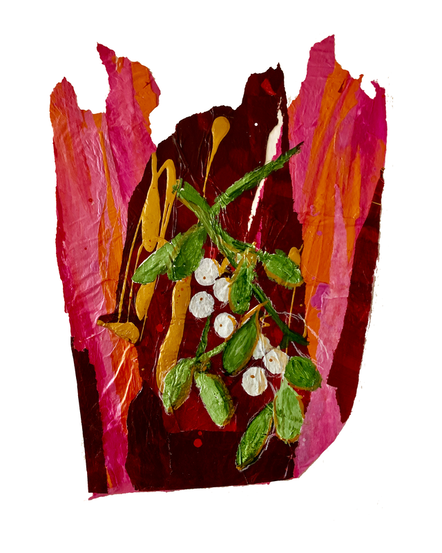
Viscum album Poisonous Gender: Masculine Element: Air Planet: Sun All my life ,I’ve heard that if you were caught, and kissed, under the mistletoe, you’d fall in love, even if you didn’t like the person at all before the kiss. From that time forward, you would love each other eternally. Let me know if it worked for you! It hasn’t been my experience, thankfully! I think it sounds a bit like a curse!
Are you familiar with the original legend of mistletoe? There is no reference to a romantic association. In the Norse version of mistletoe’s symbolism, Balder, the God of light and peace, was adored by his mother Frigg. He was said to be the most handsome of the gods, and was knowledgeable in the use of herbs and runes. She loved him dearly, and in order to protect him, she cast a spell that he could never be injured by any of the elements: water, air, fire or earth. Loki, known as the trickster god, was jealous of Balder, and was determined to destroy him. He made an arrow of mistletoe, as it was not from any of the four elements, and gave it to Hodur who was blind. As Hodur was playing with the arrow, Loki steered his arm to aim at Balder, killing him instantly. Frigg, who had never cried in her life, was heart sick and wept constantly. Her tears became the white berries on the mistletoe. She couldn’t be consoled, and finally, the gods couldn’t bear her sadness any longer so they used their powers to give Balder back his life. Frigg was overjoyed and declared mistletoe a symbol of peace. It was to be hung high, and a kiss of maternal love or friendship was to be exchanged by all who passed beneath it. The only reference to a romantic kiss under mistletoe appeared in a poem in the late 1700s. The new reference gained popularity and replaced the original association.
0 Comments
Fir - Symbolizes Rising, Protection, Determination and EnduranceGender: Masculine Element: Fire Planet: Saturn Plants that remain green and vibrant in the bitter cold winter months, when all of the surrounding plant life is dormant, have always fascinated people. The Pinaceae family, which includes cedar, fir, pine and spruce, was hung on doors to protect families long before it was considered decorative. The plants were thought to have magical powers, and symbolized endurance and eternal life. The evergreens replaced the black chicken that had previously been used for protection.
At one time, in many different cultures, black chickens were revered for their powers of protection. In some areas, witches, feared all year long and not just at Halloween, were honor bound to count every feather before they entered a home. They usually lost count, gave up, and found an unprotected home to enter. But there were disadvantages of using a hen. Even in the chill of winter, the chicken began to exude unpleasant odors, and wild animals were lured in, making the home owners uncomfortable. Fortunately, the idea of the magical evergreens, with their calming colors and numerous needles, caught on, and hanging evergreen branches on doors for the witches to count replaced the "poulet noir"! Other evergreens, such as holly, ivy, juniper, and mistletoe were added for their symbolism, as well as decorative berries in red, blue and white, and gorgeous variations in leaf shapes and shades of green. My first evergreen post will highlight the fir. It is estimated that there are about fifty species of fir in the world, including balsam, Fraser, and white. The Santa Lucia, or bristlecone fir, is thought to be the rarest tree in North America, and possibly the world! They are known for lifting their branches high and their cones are at the top of the tree. The fir’s needles are soft, flat, and singularly attached. Their needles stay attached longer than spruces or pines. This is one of the reasons they are considered the ideal Christmas tree. There are more. When Christianity arrived in northern Europe, and the legend of the Christmas tree became known, three angels, Faith, Hope and Charity were sent from the heavens to find the perfect tree! The perfect tree was to be as
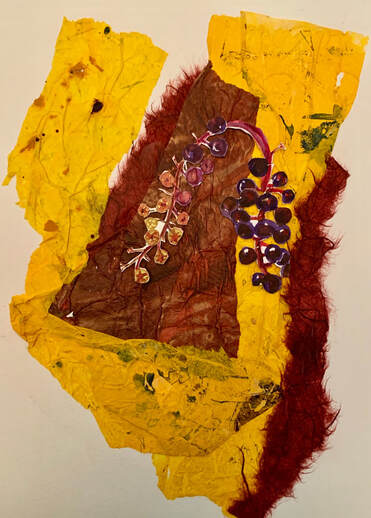
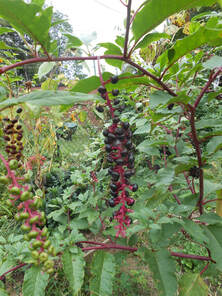
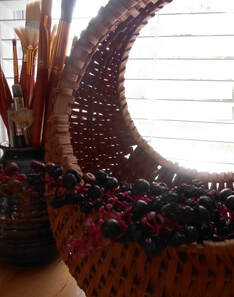
The search ended when they found the fir tree! They lighted it with stars and it became the first Christmas Tree! Eye of newt and toe of frog, Aww, come on now! You didn’t really think witches were scouring the forest to gather the eye of a newt or the toe of a frog, did you? I’ll admit, there was a time when I used to guard my dog in case the witches needed an extra dog tongue. Fortunately, I found out about the secret herbal codes! Folk names were used for herbs long before Shakespeare came along It was a bit like the copyright protections we have today. “Witches” were actually healers who were protecting their recipes and secret ingredients from those who had no understanding of nature, plants, and their magical powers. Secret code names were created to protect the identity of the ingredients, as well as give mystery to the herbal cures. Many plants are still called by their folk names today! Some names can be determined by the part of the plant associated with particular body part: for example, seeds were associated with eyes. If Shakespeare had said mustard seed instead of “eye of newt”, a certain mystery would have been lacking. The toe of a frog was a leaf of cinquefoil, holly leaves were the wool of the bat, and hound's tongue was the tongue of the dog. Thankfully! Even though his descriptions were visually stirring, they were not appreciated by the herbal healers of the time. His using their code names made them furious and they put a curse on not only Shakespeare, but anyone who dared use the word ‘Macbeth’. Uttering the word in a theater is considered bad luck, to this day. Even witches who have dedicated their lives to healing can become enraged and vengeful if their secrets are exposed! Hopefully, I won’t regret writing this article. I think I’ll go gather some agrimony, for protection, just in case! COMMENTS ALICE SCHLOTHAUER ( [email protected] ) For 15 years I lived at the corner of Blymire Hollow Road and Shangrila Road. In that part of York County the story of Mr. Blymire and Mr. Rehmeyer and the Hex Murders in 1928 was told and retold. This time of the year, we would sit on our front porch and watch the hayrides come up Blymire Hollow Road with loads of very frightened people aboard. A book called Hex was written about the incident and you can read all about it on the internet. It is full of hexery and witchcraft. Pretty fascinating! Mabon, Poke and Elvis |
|||||||||
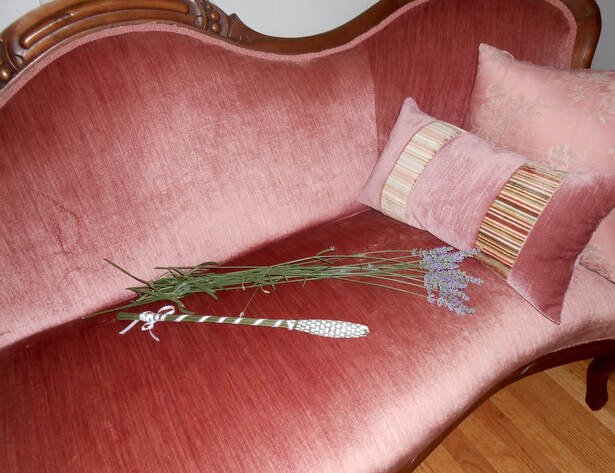
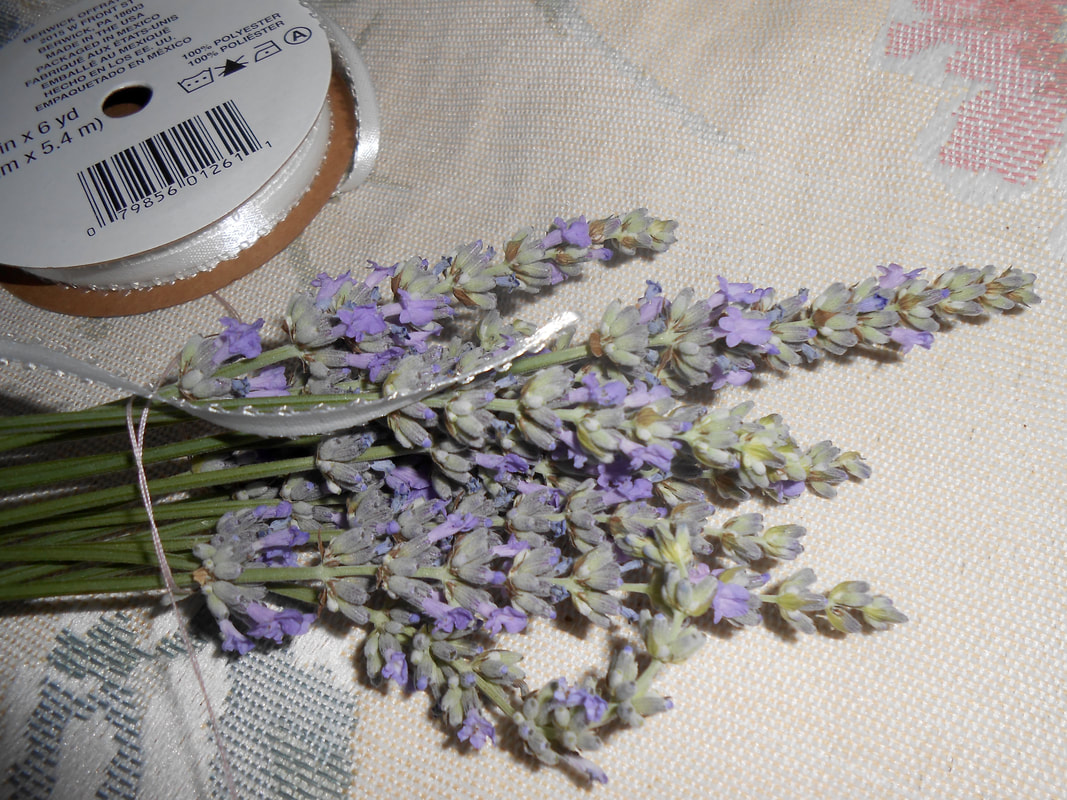
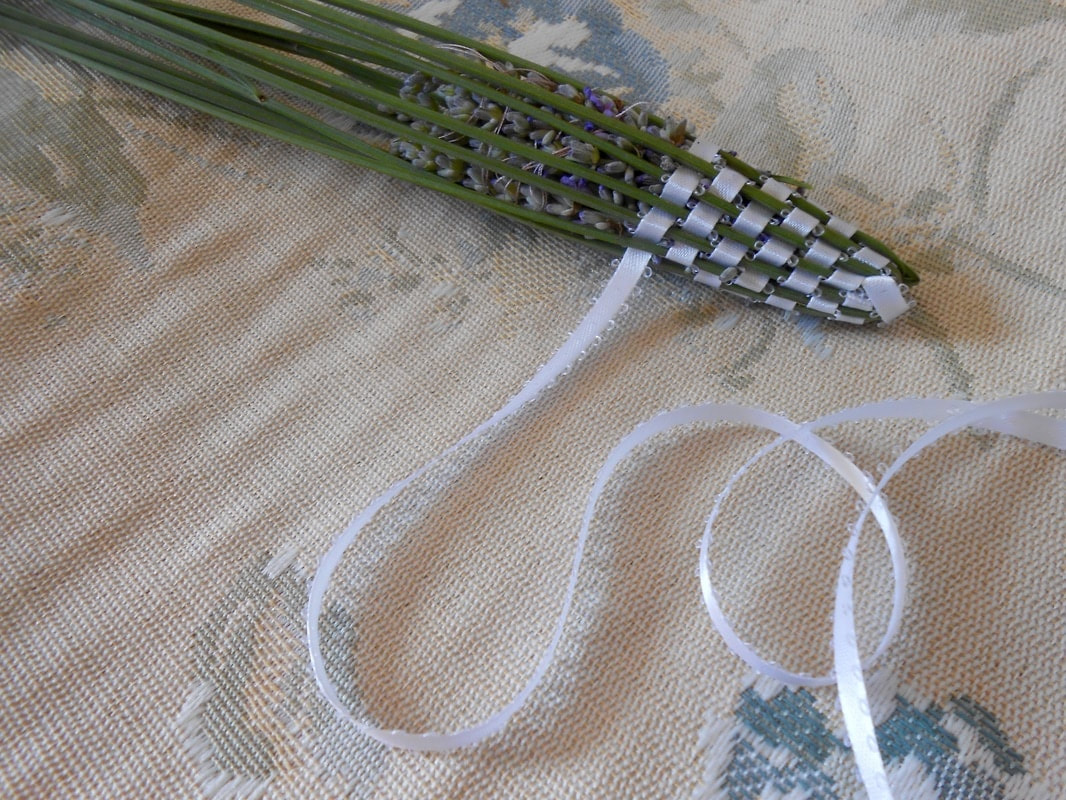
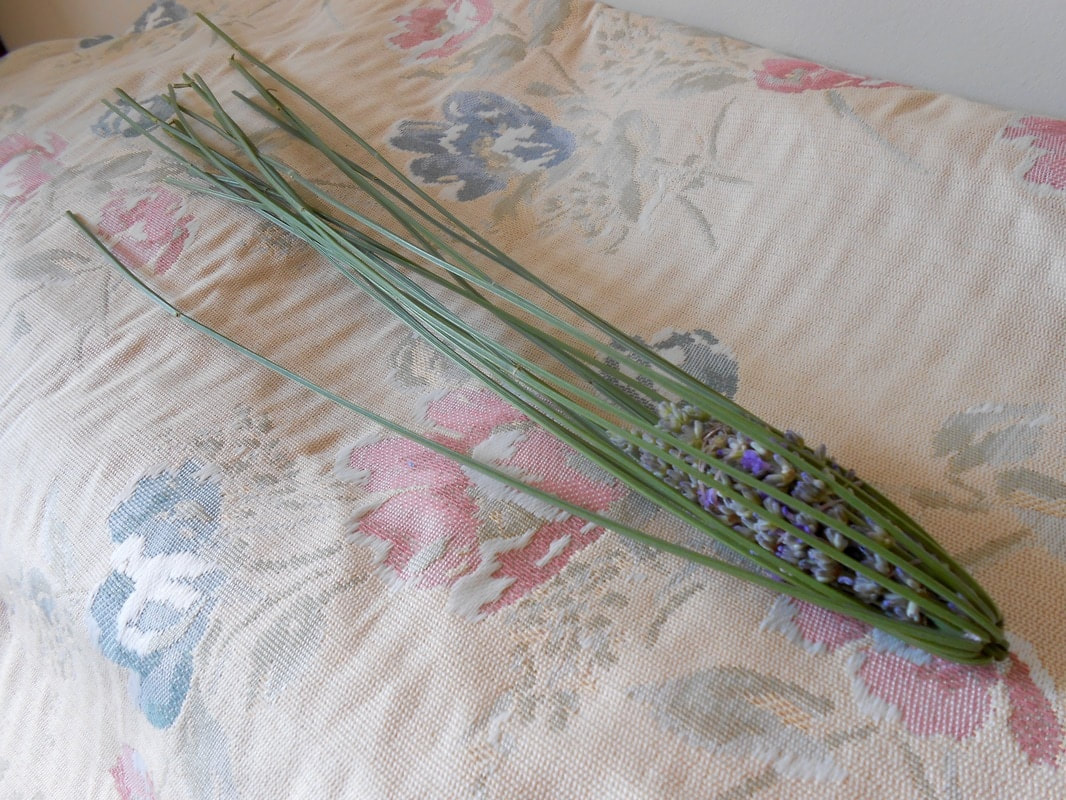
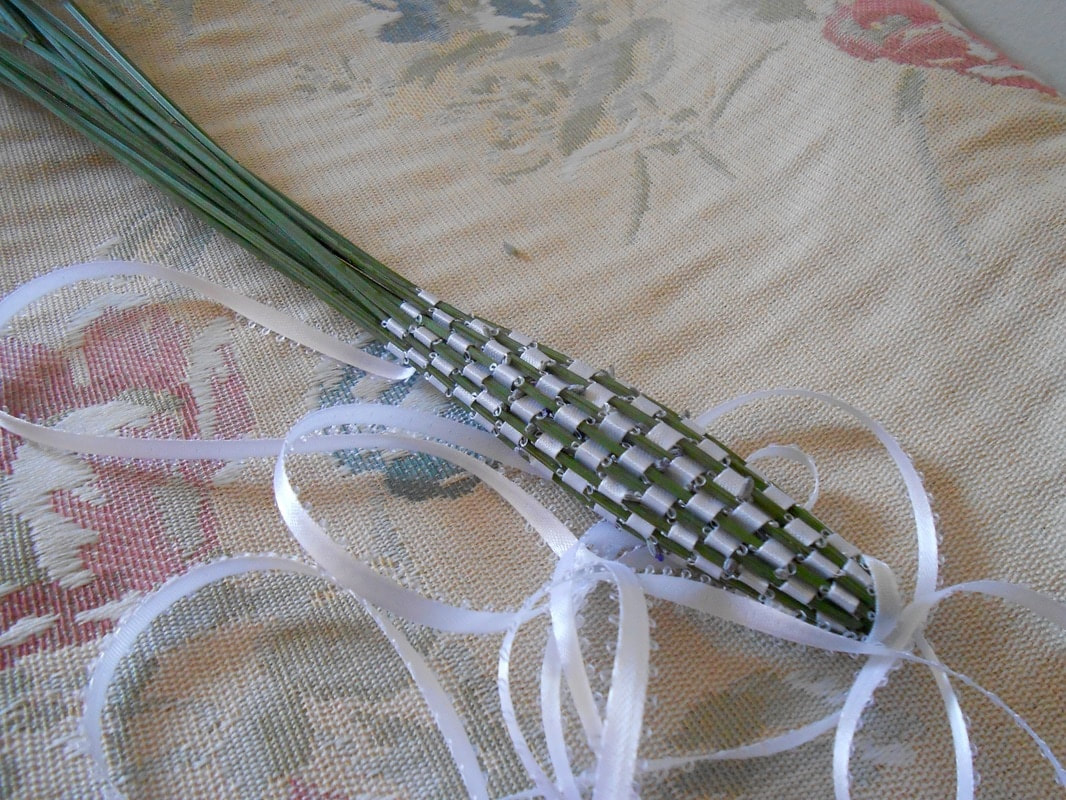
| Cut lavender stems as close to the base as possible. Remove the leaves to use for potpourris or other projects. Gather and loosely tie the flowers at the base with thread. Trim the stalks to an even length. Begin weaving the ribbon, over and under each stalk. | Tuck the end of the ribbon into the stalks to secure it. Gently fold each of the stems back over the lavender flowers. Continue weaving until you reach to bottom of the flowers. Secure the ribbon in a know but don’t cut it. |
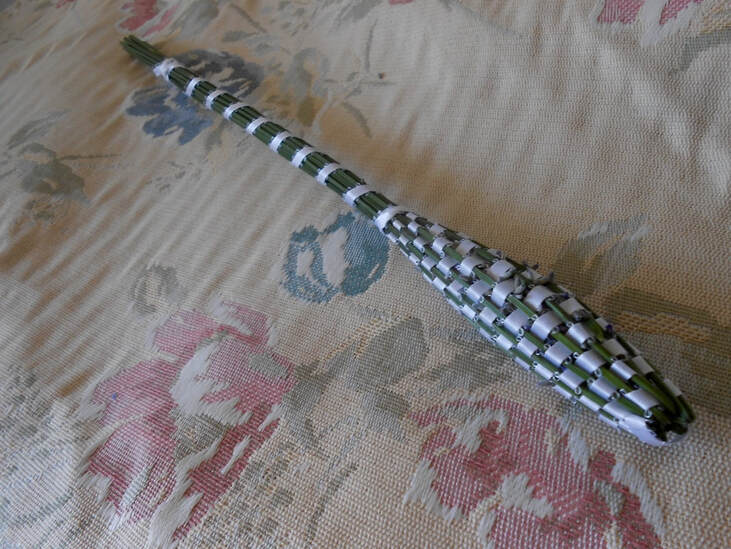
Wrap the ribbon diagonally down the stem, secure at the base of the stem with a couple of knots, then cut the ribbon.
Botrychium lunaria
Gender - Feminine
Planet - Moon
Element - Water
Planet - Moon
Element - Water
My grandmother introduced me to lunaria and called it the silver dollar plant. It looked a bit rough and raggedy until we rubbed off the casings around the silver disks and then it sparkled! It has a silvery glow, and finding and carrying it has been said to ensure that money is on the way! Other folk names include the money plant, money in both pockets, two pennies in a purse, the money tree, satin flower, penny flower, and honesty, for the translucence.
The name lunaria is from the Latin word luna, referring to its round shape and silvery glow, resembling the moon. Moonwort, another folk name, also refers to the moon, and wort indicates it is a useful plant.
Another folk name, “unshoe horse", pertains to the extensive documentation through out history of blacksmiths having to replace horse shoes from horses who had lost their shoes because they accidentally stepped on the plant. This unfortunate occurrence has afflicted people as well. Through out the years, stories have been shared about people stepping on the plant and returning home barefoot to treat their aching feet. I’ve found most herbal powers to be positive, but at times, some, like this one, are unsettling.
On a brighter note, if you return from your journey and can’t find the key to open your door, lunaria has the power to open locks! Hopefully you’ve carried a sprig of the plant home. Simply place the plant in the keyhole, and you will be able to enter your home and soak your feet!
In addition to ensuring wealth and opening locks, every part of the plant is edible! The roasted seeds are known for their spiciness and can be used as a mustard substitute. Young leaves can be eaten in salads and the roots can be peeled and eaten. And if that isn’t enough - it’s anti-aging! Lunaria oil is a moisturizer and is used in cosmetics to reduce lines and wrinkles!
The promise of wealth, prolonged youthfulness, and open locks is certainly worth losing your shoes!
Rosa spp.Rosa is the Latin meaning for “a flower”.
Gender: Feminine
Element: Water
Planet: Venus
Gender: Feminine
Element: Water
Planet: Venus
The rose, cherished internationally, is a native of the United States. The oldest known fossil was found on a slate deposit in Florissant, Colorado, and is estimated to be 35 million years old. In 1987, legislation was passed to make the rose the National Floral Emblem of the United States. It is also the state flower of the District of Columbia, Georgia, Iowa, North Dakota and New York.
Throughout history, the rose has been associated with psychic powers, healing and protection. At one time it was used extensively in cooking, and is currently used in teas and desserts. I’m hoping to reintroduce the rose’s culinary versatility with recipes for edible flowers, so watch for rosy recipes coming soon!
Most of all, roses are known for their association with love and romance. In addition to being National Rose Month, June is also the month most weddings are scheduled, and roses are often the chosen flower. Roses are also popular for Mother’s Day, Christmas, and birthdays and anniversaries all year long. On Valentine’s Day, approximately 250 million flowers are sold annually in the United States, and one-third of them are roses!
“The rose is the emblem of all ages, the interpreter of all our feelings, the rose mingles with our festivities, our joy, our grief. Modesty borrows the delicate blush; it is given as the prize of virtue, the image of youth, innocence, and pleasure. It is consecrated to Venus, the goddess of beauty, and like her, possesses a grace more exquisite than beauty itself.”
~ From the Language of Flowers - 1846, Illustrated by Kate Greenaway
Flowers took on a new role in the Victorian era. The Victorians attributed meaning to flowers, creating an elegant and silent language. Roses were a favorite. Over the years, meanings have been expanded and altered. (Yellow roses once symbolized jealousy but the modern interpretation is friendship, for example).
For those of you hoping to add more symbolism and meaning to your rose bouquets, my Ode to the Rose, Legends, Lore and Language, from the archives, will help you choose the color and numbers to customize your message. You’ll also find some fun facts, and fantasies, about the rose. Enjoy!
Throughout history, the rose has been associated with psychic powers, healing and protection. At one time it was used extensively in cooking, and is currently used in teas and desserts. I’m hoping to reintroduce the rose’s culinary versatility with recipes for edible flowers, so watch for rosy recipes coming soon!
Most of all, roses are known for their association with love and romance. In addition to being National Rose Month, June is also the month most weddings are scheduled, and roses are often the chosen flower. Roses are also popular for Mother’s Day, Christmas, and birthdays and anniversaries all year long. On Valentine’s Day, approximately 250 million flowers are sold annually in the United States, and one-third of them are roses!
“The rose is the emblem of all ages, the interpreter of all our feelings, the rose mingles with our festivities, our joy, our grief. Modesty borrows the delicate blush; it is given as the prize of virtue, the image of youth, innocence, and pleasure. It is consecrated to Venus, the goddess of beauty, and like her, possesses a grace more exquisite than beauty itself.”
~ From the Language of Flowers - 1846, Illustrated by Kate Greenaway
Flowers took on a new role in the Victorian era. The Victorians attributed meaning to flowers, creating an elegant and silent language. Roses were a favorite. Over the years, meanings have been expanded and altered. (Yellow roses once symbolized jealousy but the modern interpretation is friendship, for example).
For those of you hoping to add more symbolism and meaning to your rose bouquets, my Ode to the Rose, Legends, Lore and Language, from the archives, will help you choose the color and numbers to customize your message. You’ll also find some fun facts, and fantasies, about the rose. Enjoy!
| Ode to the Rose, Legends, Lore and Language | |
| File Size: | 2802 kb |
| File Type: | |
" If you need help releasing sadness from the past to enable you to find future happiness,
the snowdrop will be useful."
Galanthus nivalis
Poisonous
Named “milk flower of the snow” by Swedish botanist Carl Linnaeus in 1753.
Gender: Feminine
Element: Water
Planet: Saturn
The snowdrop is a segue between winter and spring, symbolizing hope even in the most challenging situations. This precious herb is associated with magic and miracles, healing, divine love, purity, and innocence. They are accredited with an uplifting energy. If you need help releasing sadness from the past to enable you to find future happiness, the snowdrop will be useful. You’ll often find it at weddings, encouraging a future filled with the promise of everlasting love.
The snowdrop is also associated with death, as it was often found in graveyards. The ancient Greeks noted Persephone, Queen of the Underworld, carried snowdrops when she returned from Hades each spring. Their association with death is the reason they are often found at funerals and featured on sympathy cards.
Folk names echo the flower’s contradictory symbolism. They have been called the the Flower of Hope, Mary’s Taper, and Candlemas Bells. On a more somber note, they have been called Eve’s Tears and Death Flower. In Victorian England, seeing a single snowdrop indicated there would be a death. It was bad luck to pick a snowdrop, and bringing it into the house would have dire consequences.
Regardless of its names, it is always a harbinger of spring, bringing hope for the end of winter and warmer days ahead.
You’ll find 8” x 10” prints, as well as sympathy cards of the snowdrop, in my storefront.
The snowdrop is also associated with death, as it was often found in graveyards. The ancient Greeks noted Persephone, Queen of the Underworld, carried snowdrops when she returned from Hades each spring. Their association with death is the reason they are often found at funerals and featured on sympathy cards.
Folk names echo the flower’s contradictory symbolism. They have been called the the Flower of Hope, Mary’s Taper, and Candlemas Bells. On a more somber note, they have been called Eve’s Tears and Death Flower. In Victorian England, seeing a single snowdrop indicated there would be a death. It was bad luck to pick a snowdrop, and bringing it into the house would have dire consequences.
Regardless of its names, it is always a harbinger of spring, bringing hope for the end of winter and warmer days ahead.
You’ll find 8” x 10” prints, as well as sympathy cards of the snowdrop, in my storefront.
Box Huckleberry
Element: Water
Gender: Feminine
Planet - Venus
Gender: Feminine
Planet - Venus
Can you name a plant that covers 8 acres of land, is 1300 years old,
will protect you and bring you luck as you enter the new year?
The box huckleberry is a member of the Ericaceae family, which includes azaleas, rhododendron, trailing arbutus, cranberries and blueberries and more. This particular plant is enormous, but in an understated way. Unlike the giant Sequoias and the Bristlecone pines, known for their size and their age, the box huckleberry is only about a half a foot tall. It covers the forest floor and can easily be overlooked.
My youngest daughter and I have always loved hiking and discovering natural treasures. One of our favorite jaunts is to visit the Hoverter and Sholl Box Huckleberry in Perry County, Pennsylvania. There are two box huckleberry plants in the area. One, at Losh Run, is thought to be over 13,000 years old! Bristlecone pines, at 5,000 years old, were considered to be the oldest living organisms on earth, yet the box elder is significantly older. The age is determined by the rate of growth, approximately 6 inches a year, and was calculated by the size of the plants.
Unfortunately, part of the Losh Run Box Huckleberry, which at one time covered an area of about 100 acres, nearly 10 times larger than the Hoveter Sholl, was partially destroyed during the 1970s due to road construction of U.S. 22/322. The remainder is in an area difficult to access.
The younger plant is estimated to be 1,200 to 1,300 years old, and fortunately is in a protected area as a National Natural Landmark. The 8 acre colony is situated on a 10 acres area in Tuscarora State Forest with a quarter mile path around the plant. Twenty-seven stations along the loop give information about the the plant. The Hoveter Sholl plant was discovered in 1845 by Spencer Fullerton Baird, professor at Dickinson College in Carlisle. He was a naturalist and became the first curator of the Smithsonian Institution and later the second Secretary of the institution.
The box huckleberry was almost forgotten until 1948 when Dr. Fredrick Coville, a graduate of Cornell University working for the Department of Agriculture, determined the extensive growth, covering over 8 acres, was one massive plant!
Have you discovered natural wonders worth sharing with others? Have you had any unexpected finds while taking hikes and exploring less traveled paths? Please share them in the comments below!
My youngest daughter and I have always loved hiking and discovering natural treasures. One of our favorite jaunts is to visit the Hoverter and Sholl Box Huckleberry in Perry County, Pennsylvania. There are two box huckleberry plants in the area. One, at Losh Run, is thought to be over 13,000 years old! Bristlecone pines, at 5,000 years old, were considered to be the oldest living organisms on earth, yet the box elder is significantly older. The age is determined by the rate of growth, approximately 6 inches a year, and was calculated by the size of the plants.
Unfortunately, part of the Losh Run Box Huckleberry, which at one time covered an area of about 100 acres, nearly 10 times larger than the Hoveter Sholl, was partially destroyed during the 1970s due to road construction of U.S. 22/322. The remainder is in an area difficult to access.
The younger plant is estimated to be 1,200 to 1,300 years old, and fortunately is in a protected area as a National Natural Landmark. The 8 acre colony is situated on a 10 acres area in Tuscarora State Forest with a quarter mile path around the plant. Twenty-seven stations along the loop give information about the the plant. The Hoveter Sholl plant was discovered in 1845 by Spencer Fullerton Baird, professor at Dickinson College in Carlisle. He was a naturalist and became the first curator of the Smithsonian Institution and later the second Secretary of the institution.
The box huckleberry was almost forgotten until 1948 when Dr. Fredrick Coville, a graduate of Cornell University working for the Department of Agriculture, determined the extensive growth, covering over 8 acres, was one massive plant!
Have you discovered natural wonders worth sharing with others? Have you had any unexpected finds while taking hikes and exploring less traveled paths? Please share them in the comments below!
Welcome to my Blog!
Do you love celebrating nature, botanical art, herbal recipes, crafts, legend and lore? I’d love to hear about your favorites. I’m inspired by words, the alphabet, and things that begin with the letter v- variety, vases, vulnerability, violets, vintage, vacations, vanilla, and velvet. Do you have a favorite letter of the alphabet? What is it, and why do you love it?
Categories
All
Botanical Illustrations
Celbrations
Herbal Crafts
Herbal History
Herbal Lore
Herbal Recipes
Lessons
Quotes
Symbolism
RSS Feed