|
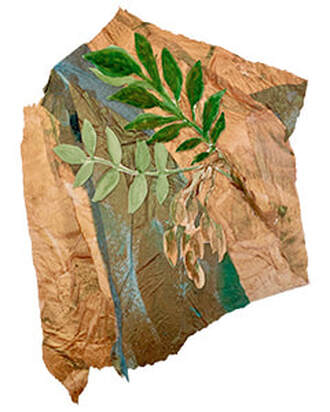
I can’t remember a time in life when protection, hope and peace have been more needed. People are being hurt, families are being ripped apart, long term Minneapolis residents who have contributed so greatly to our city - to our culture, to our economy - are being terrorized and now somebody is dead. " In response to the murder of Renee Nicole Good, 37, by trump’s ICE agents on 1/7/2026. Olea europaeaOlea europaea means European Olive, and is associated with peace. Gender: Masculine Element: Fire Planet: Sun The olive is an evergreen native to the Mediterranean. Olives and olive oil are associated with Mediterranean cuisine. Greeks use the most olive oil per capita followed by Spain, Italy, Tunisia, Portugal, Syria, Joran and Lebanon. I’m fairly confident my annual consumption is equivalent to the Greeks per capita at 24 liters (6.3 U.S. gallons).
In addition to its culinary contributions, the olive has powers to protect, heal, increase fertility, hope and peace. I can’t remember a time when I’ve felt we need protection, hope and peace more. Hanging an olive branch over your doorway will prevent evil spirits from entering and provide protection. Volumes have been written about the health benefits of olive oil. Brides in Greece wore wreaths of olive leaves to ensure fertility and eating the olives was also said to be helpful. Noah released a dove after the flood and it returned to the ark, carrying a freshly plucked olive branch, which symbolized hope, an indication of dry land after a flood. Ancient Greek and Roman civilizations used the olive branch to represent peace following battles. When the losing side admitted defeat, they presented the olive branch to indicate their readiness to surrender. Eirene (Irene), the goddess of peace in Ancient Greece, was fond of the olive.
0 Comments
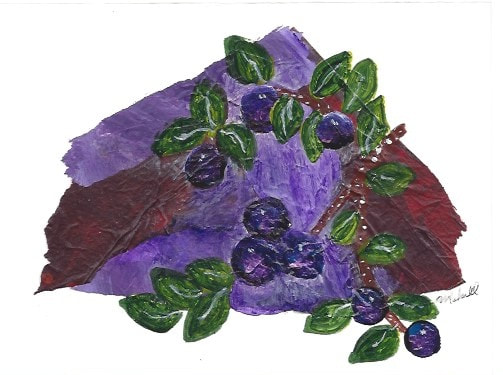
Box Huckleberry Element: Water Gender: Feminine Planet - Venus Can you name a plant that covers 8 acres of land, is 1300 years old, will protect you and bring you luck as you enter the new year? The box huckleberry is a member of the Ericaceae family, which includes azaleas, rhododendron, trailing arbutus, cranberries and blueberries and more. This particular plant is enormous, but in an understated way. Unlike the giant Sequoias and the Bristlecone pines, known for their size and their age, the box huckleberry is only about a half a foot tall. It covers the forest floor and can easily be overlooked.
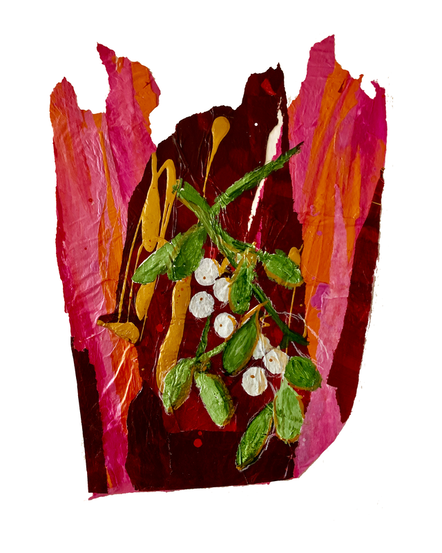
My youngest daughter and I have always loved hiking and discovering natural treasures. One of our favorite jaunts is to visit the Hoverter and Sholl Box Huckleberry in Perry County, Pennsylvania. There are two box huckleberry plants in the area. One, at Losh Run, is thought to be over 13,000 years old! Bristlecone pines, at 5,000 years old, were considered to be the oldest living organisms on earth, yet the box elder is significantly older. The age is determined by the rate of growth, approximately 6 inches a year, and was calculated by the size of the plants. Unfortunately, part of the Losh Run Box Huckleberry, which at one time covered an area of about 100 acres, nearly 10 times larger than the Hoveter Sholl, was partially destroyed during the 1970s due to road construction of U.S. 22/322. The remainder is in an area difficult to access. The younger plant is estimated to be 1,200 to 1,300 years old, and fortunately is in a protected area as a National Natural Landmark. The 8 acre colony is situated on a 10 acres area in Tuscarora State Forest with a quarter mile path around the plant. Twenty-seven stations along the loop give information about the the plant. The Hoveter Sholl plant was discovered in 1845 by Spencer Fullerton Baird, professor at Dickinson College in Carlisle. He was a naturalist and became the first curator of the Smithsonian Institution and later the second Secretary of the institution. The box huckleberry was almost forgotten until 1948 when Dr. Fredrick Coville, a graduate of Cornell University working for the Department of Agriculture, determined the extensive growth, covering over 8 acres, was one massive plant! Have you discovered natural wonders worth sharing with others? Have you had any unexpected finds while taking hikes and exploring less traveled paths? Please share them in the comments below! Viscum album Poisonous Gender: Masculine Element: Air Planet: Sun All my life ,I’ve heard that if you were caught, and kissed, under the mistletoe, you’d fall in love, even if you didn’t like the person at all before the kiss. From that time forward, you would love each other eternally. Let me know if it worked for you! It hasn’t been my experience, thankfully! I think it sounds a bit like a curse!
Are you familiar with the original legend of mistletoe? There is no reference to a romantic association. In the Norse version of mistletoe’s symbolism, Balder, the God of light and peace, was adored by his mother Frigg. He was said to be the most handsome of the gods, and was knowledgeable in the use of herbs and runes. She loved him dearly, and in order to protect him, she cast a spell that he could never be injured by any of the elements: water, air, fire or earth. Loki, known as the trickster god, was jealous of Balder, and was determined to destroy him. He made an arrow of mistletoe, as it was not from any of the four elements, and gave it to Hodur who was blind. As Hodur was playing with the arrow, Loki steered his arm to aim at Balder, killing him instantly. Frigg, who had never cried in her life, was heart sick and wept constantly. Her tears became the white berries on the mistletoe. She couldn’t be consoled, and finally, the gods couldn’t bear her sadness any longer so they used their powers to give Balder back his life. Frigg was overjoyed and declared mistletoe a symbol of peace. It was to be hung high, and a kiss of maternal love or friendship was to be exchanged by all who passed beneath it. The only reference to a romantic kiss under mistletoe appeared in a poem in the late 1700s. The new reference gained popularity and replaced the original association. Zingiber officinale |
|||||||
| Ode to the Rose, Legends, Lore and Language | |
| File Size: | 2802 kb |
| File Type: | |
Viola spp.
Gender: Feminine
Element: Water
Planet: Venus
Gender: Feminine
Element: Water
Planet: Venus
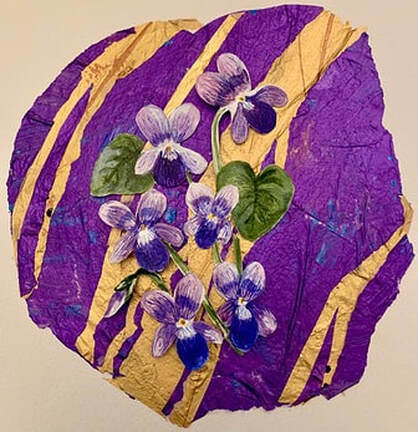
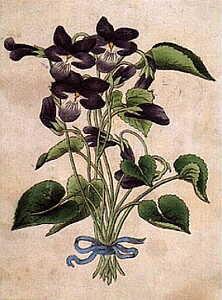
Violets delight me! They visit for such a short time in the spring, yet have numerous attributes and an extensive history. Violets will protect you from “wykked sperytis” and will bring luck and love. They are featured in mythology, folk lore, literature and poetry. They have been used to cure headaches, calm tempers, and induce sleep. They have been crystallized, used for syrups and jellies, and candied.
There are over 550 species of violets, found in temperate climates around the world. They have many folk names and most of them are reminiscent of sex or love, as they are associated with the planet, and goddess of love, Venus. In addition, their leaves are often heart shaped, giving them a place of honor with the romancing herbs.
Like the rose, the color of the violet has great significance in sending messages. Blue violets promise "My love will always be true", and purple send the message, "I return your love." White signifies "I'm willing to take a chance on happiness". In William Cullen Bryant’s poem "The Yellow Violet", he associated the yellow violet with a lost love. In the language of flowers, yellow symbolizes friendship, happiness, joy and success. All violets represents modesty and humility, as they often hide their spectacular beauty under their leaves.
Violets are highlighted in many myths and legends. One rather disturbing story comes from the goddess Venus asking her son Cupid if he thought she was more attractive than a group of maidens playing along the edge of the woods. He said he found the maidens to be more beautiful, so she beat them until they were blue. I doubt that it’s valid. She is the goddess of love, after all!
Another legend states at one time violets were white, but Mary's grief at seeing the suffering of Jesus on the cross turned them all blue. They have been associated with the modesty of the Virgin Mary, the Angel Gabriel, the Holy Trinity, and Greek and Roman legends and lore. Athens has been referred to as the "Violet Crowned City”. They have also been associated with Napoleon.
There are over 550 species of violets, found in temperate climates around the world. They have many folk names and most of them are reminiscent of sex or love, as they are associated with the planet, and goddess of love, Venus. In addition, their leaves are often heart shaped, giving them a place of honor with the romancing herbs.
Like the rose, the color of the violet has great significance in sending messages. Blue violets promise "My love will always be true", and purple send the message, "I return your love." White signifies "I'm willing to take a chance on happiness". In William Cullen Bryant’s poem "The Yellow Violet", he associated the yellow violet with a lost love. In the language of flowers, yellow symbolizes friendship, happiness, joy and success. All violets represents modesty and humility, as they often hide their spectacular beauty under their leaves.
Violets are highlighted in many myths and legends. One rather disturbing story comes from the goddess Venus asking her son Cupid if he thought she was more attractive than a group of maidens playing along the edge of the woods. He said he found the maidens to be more beautiful, so she beat them until they were blue. I doubt that it’s valid. She is the goddess of love, after all!
Another legend states at one time violets were white, but Mary's grief at seeing the suffering of Jesus on the cross turned them all blue. They have been associated with the modesty of the Virgin Mary, the Angel Gabriel, the Holy Trinity, and Greek and Roman legends and lore. Athens has been referred to as the "Violet Crowned City”. They have also been associated with Napoleon.
Corporal Violet (Napoleon Bonaparte) used Violets to
Announce His Plan to Return from Exile
Napoleon chose the violet as his emblem, announcing that in spite of his exile in Elba in 1814, like the violet, he would return in the spring. The violet postcards were sent to his loyal supporters to reassure them. He returned, as promised, but his victory was short-lived.
Can you find the three faces in the postcard? The profiles of Napoleon, Marie Louise, and their three year old son Charles, are hidden among the violets.
Spring Salad with Violets
My favorite use for violets is sprinkled on a tossed green salad (you could use spinach, red lettuce, kale, romaine, or any combination) when she first appears in the spring. She is rich in vitamins A and C, as well as antioxidants. Add raspberries or strawberries, orange sections, radishes, red onions and avocado. Use your favorite vinaigrette salad dressing or try my Raspberry Poppy Seed Dressing from an earlier newsletter!
My grandmother grew tulips in many colors of the rainbow next to her wrap around porch on her farm in Greencastle, Indiana. She passed years ago, but this poem by Lisa Schroeder reminds me of her.
Tulipa spp.
Gender: Feminine
Element: Earth
Planet: Venus
As a child, tulips reminded me of my grandmother and the promise of spring! The varieties are delightful from the huge Emperor tulips, classic Dutch, double tulips, fringed, flared, parrot and more. All colors from pristine white to deep black, and every color in between are available, with some having two or more colors! Tulips planted around a home were thought to provide protection from curses and evil spirits, and bring prosperity and luck.
They originated in Central Asia and Turkey, and were associated turbans and protection. I always thought they came from the Netherlands, but they didn’t arrive there until the 17th century, and were a symbol of wealth and status. There was a period during 1636 and 1637, called the Dutch Golden Age, when the prices for exotic and rare tulip varieties skyrocketed. One of the most expensive bulbs was compared to the price of a brownstone home in New York City. The ‘mania’ was short lived and the collapse of the bubble had economic repercussions long after the brief period of madness.
Many of you know I research topics for my workshops and topics using the alphabet. When I got to H as I was researching tulips, I was surprised to learn of the Hunger Winter. Tulips were used as food in attempts to stay alive, but tens of thousands died, and many suffered long term health issues for the rest of their lives. Actress Audrey Hepburn was a teenager living in the Netherlands during the winder of 1944 - 1945. She suffered from malnutrition and hardships as a result of the famine.
They originated in Central Asia and Turkey, and were associated turbans and protection. I always thought they came from the Netherlands, but they didn’t arrive there until the 17th century, and were a symbol of wealth and status. There was a period during 1636 and 1637, called the Dutch Golden Age, when the prices for exotic and rare tulip varieties skyrocketed. One of the most expensive bulbs was compared to the price of a brownstone home in New York City. The ‘mania’ was short lived and the collapse of the bubble had economic repercussions long after the brief period of madness.
Many of you know I research topics for my workshops and topics using the alphabet. When I got to H as I was researching tulips, I was surprised to learn of the Hunger Winter. Tulips were used as food in attempts to stay alive, but tens of thousands died, and many suffered long term health issues for the rest of their lives. Actress Audrey Hepburn was a teenager living in the Netherlands during the winder of 1944 - 1945. She suffered from malnutrition and hardships as a result of the famine.
Illustrated Journal Pages on the Hunger Winter
The deaths during the hunger winter resulted from a variety of factors. It was a harsh and brutal winter, and the Germans requisitioned food from the Netherlands to support their war efforts, depleting the food supply for the Dutch population. Allied forces implemented a blockade to German occupied territories, and bombings and military action in the area greatly impacted transporting food.
Sketches from my Illustrated Journal
Welcome to my Blog!
Do you love celebrating nature, botanical art, herbal recipes, crafts, legend and lore? I’d love to hear about your favorites. I’m inspired by words, the alphabet, and things that begin with the letter v- variety, vases, vulnerability, violets, vintage, vacations, vanilla, and velvet. Do you have a favorite letter of the alphabet? What is it, and why do you love it?
Categories
All
Botanical Illustrations
Celbrations
Herbal Crafts
Herbal History
Herbal Lore
Herbal Recipes
Lessons
Quotes
Symbolism
RSS Feed